Commandez en ligne, retrait gratuit en librairie

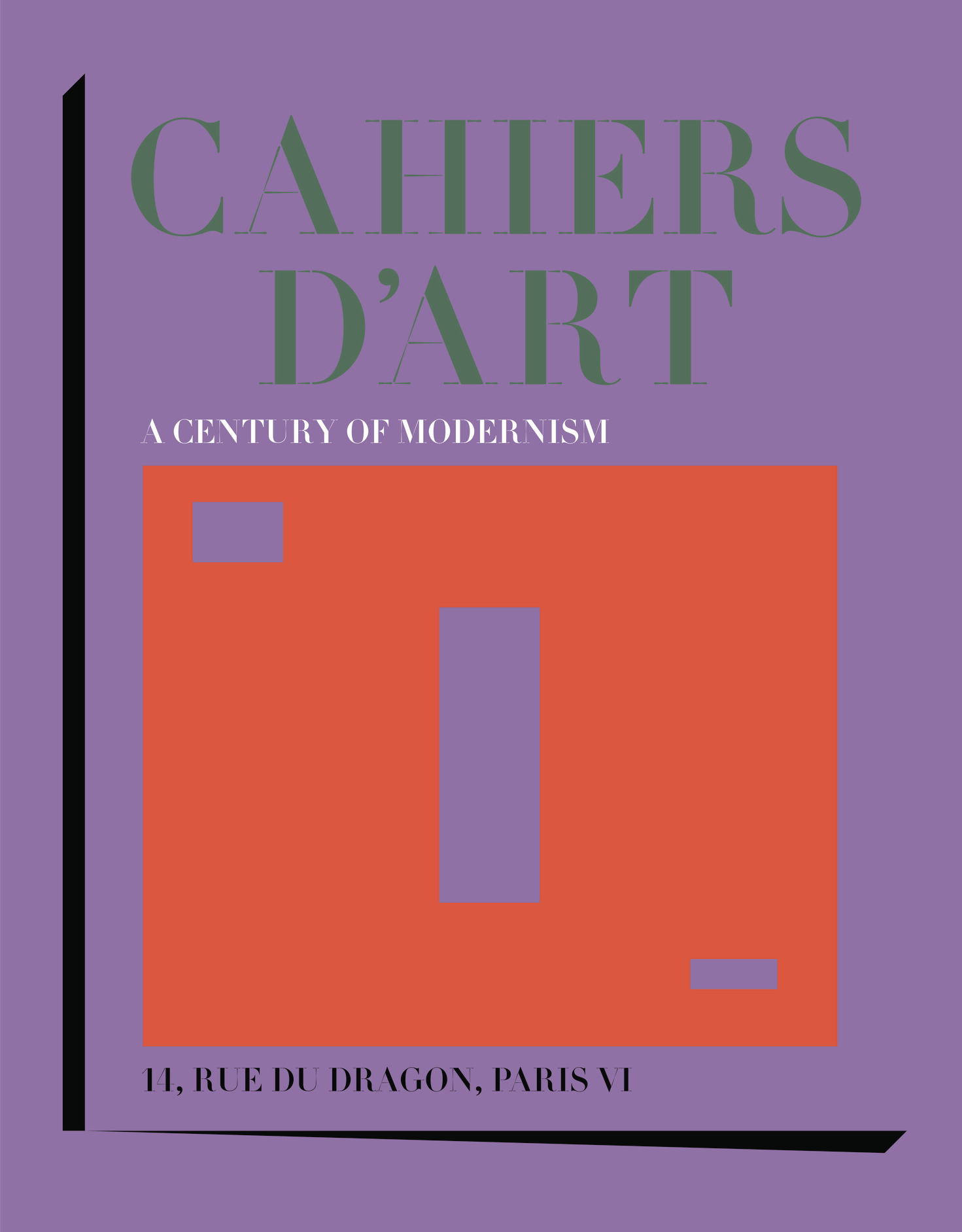
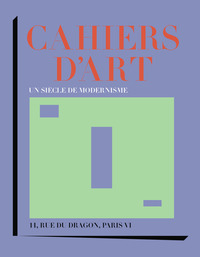
Cahiers d'Art
Founded in Paris in 1926 by art historian and critic Christian Zervos, Cahiers d'Art soon became far more than an artistic and literary journal : it was at once a laboratory of ideas, a portable museum, and a manifesto in seriaI form that shaped how modern art was seen, discussed, and historicized across Europe, and beyond. At a time when modernism remained fragmented and contested, Cahiers d'Art offered a unifying, transnational platform. Its pages brought together leading figures of the avant-gardeincluding Pablo Picasso, Henri Matisse, Wassily Kandinsky, Marcel Duchamp, Meret Oppenheim, and Joan Miro - placing artists in dialogue rather than in competition. Through exceptional photographic reproduction and rigorous critical framing, the publication helped establish the canon of modern art while it was still being formed. Beyond the visual arts, Cahiers d'Art served as a critical forum for thinkers such as Jacques Lacan, Georges Bataille, and Maurice Blanchot. Since its relaunch in 2012, it has renewed this spirit, bridging historical figures like Fernand Léger or Alexander Calder with contemporary voices such as Cildo Meireles, Arthur Jafa, Gabriel Orozco, and Rosemarie Trockel, affirming that modernism was not accidentaI, but edited and disseminated, page by page. This richly illustrated volume celebrates the groundbreaking journal's centenary and revisits its legacy through newly commissioned essays, interviews, archivaI facsimiles, and a major visual atlas. Contributions by Cécile Debray, Daniel Birnbaum, Effie Rentzou, and Beatriz Colomina explore Cahiers d'Art as a crucible of artistic experimentation, intellectual exchange, and modernist thought.
À propos de ce livre
Founded in Paris in 1926 by art historian and critic Christian Zervos, Cahiers d'Art soon became far more than an artistic and literary journal : it was at once a laboratory of ideas, a portable museum, and a manifesto in seriaI form that shaped how modern art was seen, discussed, and historicized across Europe, and beyond. At a time when modernism remained fragmented and contested, Cahiers d'Art offered a unifying, transnational platform. Its pages brought together leading figures of the avant-gardeincluding Pablo Picasso, Henri Matisse, Wassily Kandinsky, Marcel Duchamp, Meret Oppenheim, and Joan Miro - placing artists in dialogue rather than in competition. Through exceptional photographic reproduction and rigorous critical framing, the publication helped establish the canon of modern art while it was still being formed. Beyond the visual arts, Cahiers d'Art served as a critical forum for thinkers such as Jacques Lacan, Georges Bataille, and Maurice Blanchot. Since its relaunch in 2012, it has renewed this spirit, bridging historical figures like Fernand Léger or Alexander Calder with contemporary voices such as Cildo Meireles, Arthur Jafa, Gabriel Orozco, and Rosemarie Trockel, affirming that modernism was not accidentaI, but edited and disseminated, page by page. This richly illustrated volume celebrates the groundbreaking journal's centenary and revisits its legacy through newly commissioned essays, interviews, archivaI facsimiles, and a major visual atlas. Contributions by Cécile Debray, Daniel Birnbaum, Effie Rentzou, and Beatriz Colomina explore Cahiers d'Art as a crucible of artistic experimentation, intellectual exchange, and modernist thought.
Publié chez FLAMMARION en octobre 2026, cet ouvrage fait partie de nos recommandations au rayon Romans.
Le mot du libraire
Chaque livre présent dans notre librairie a été lu ou parcouru par notre équipe. Ce titre nous a particulièrement marqués pour sa qualité d’écriture et la justesse de son propos. N’hésitez pas à passer à la librairie : nous serons heureux d’en discuter avec vous.
Souvent achetés ensemble
Ce qu’ils en ont pensé
Aucun avis pour le moment — soyez le premier à donner le vôtre.
Connectez-vous pour laisser un avis.
Une question sur ce livre ?
Un libraire lit votre message et vous répond — sur Cahiers d'Art comme sur ce que vous pourriez lire ensuite.
Une question fréquente, à compléterVotre adresse sert uniquement à vous répondre. Elle n’est ni affichée, ni transmise : la librairie répond par la messagerie Vitaville.
0/2000Autour de ce livre